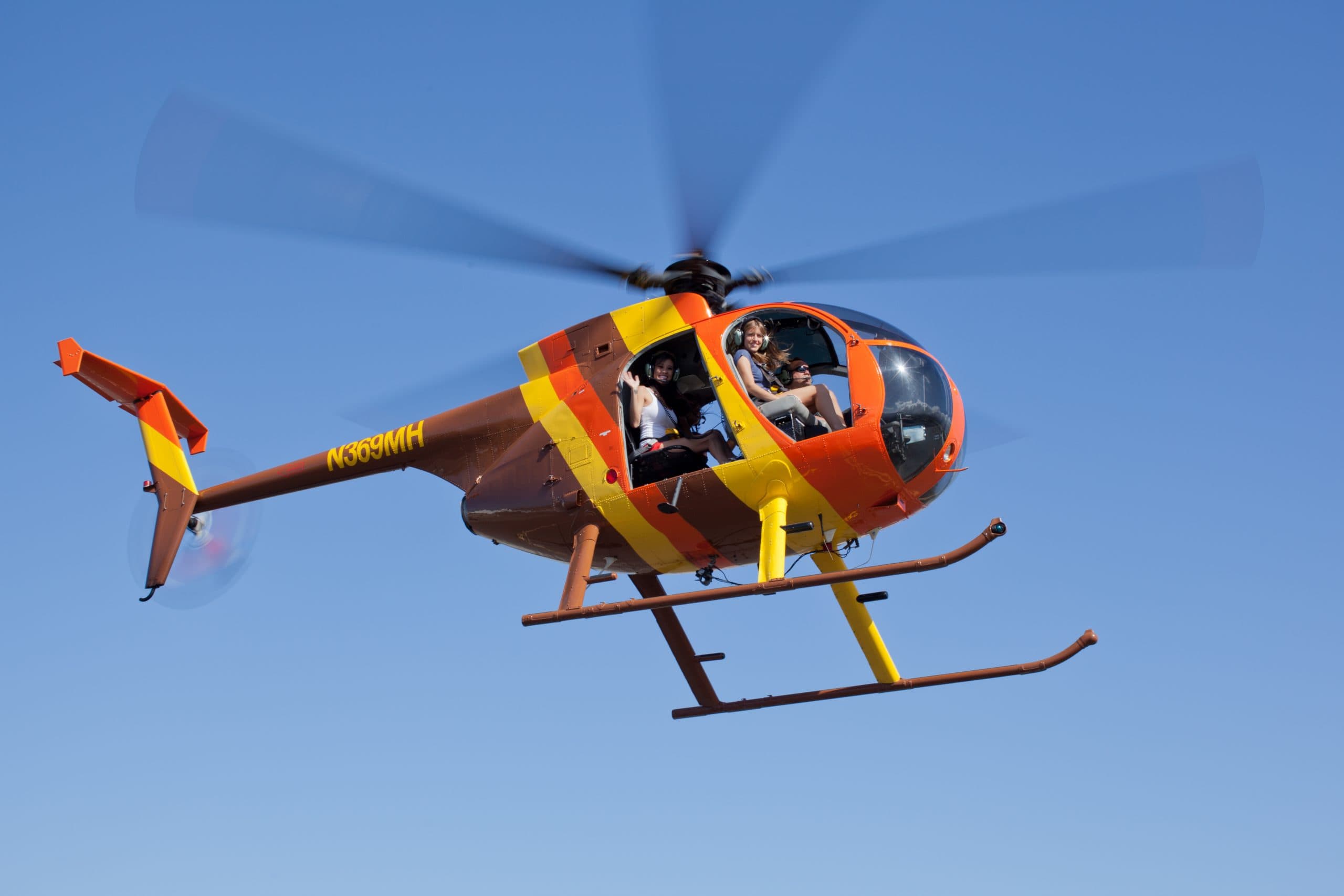
“Doors off” is one of those phrases that sounds more extreme than it is — and simultaneously undersells how different the experience actually feels. If you're considering a helicopter tour on Oahu, understanding what doors-off means (and doesn't mean) will help you decide whether it's the right flight for you.
What “Doors Off” Actually Means
Before takeoff, the crew physically removes the doors from both sides of the helicopter. You fly with open air where the doors would normally be. Wind comes through the cabin. You can lean slightly and look straight down at the ocean, the mountains, or whatever the helicopter is flying over.
You wear a FAA-compliant harness system that secures you to your seat. It's the same type of restraint used in aerobatic aircraft. You can move your arms, hold a camera, and shift your weight — you just can't go anywhere. The system is checked by crew before takeoff and is genuinely secure.
The wind factor is real but manageable. At cruise speed, it's breezy rather than violent. Your hair will move. Loose items will disappear. It's not the gale-force blast some people imagine. You can see the full doors-off helicopter tour details including route, pricing, and what's included.
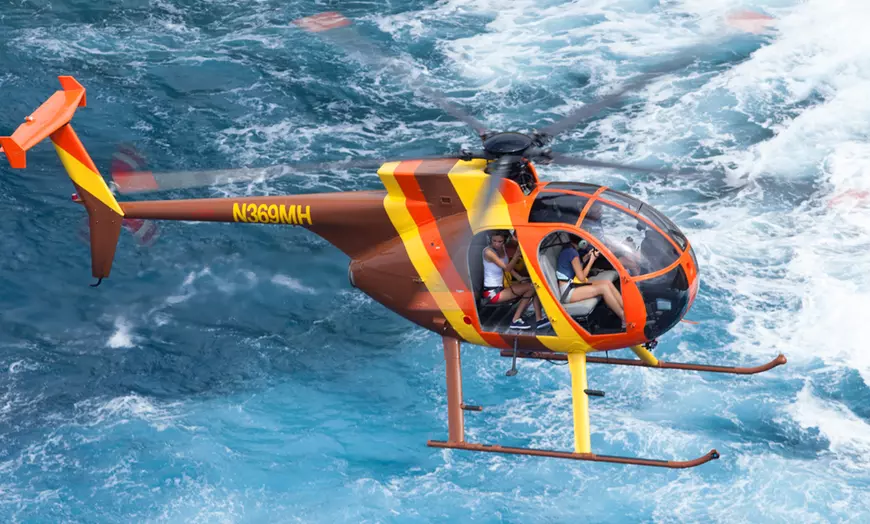
Why Doors-Off Matters for Photography
This is the biggest practical reason to choose doors-off over a standard enclosed flight. With doors on, you're shooting through curved plexiglass that creates glare, reflections, and color shifts. Polarizing filters help, but they don't eliminate the problem. With doors off, there's nothing between your lens and the landscape.
The difference in image quality is dramatic. Colors are truer. Details are sharper. You can shoot at wider angles without catching door frames or window edges. Professional aerial photographers almost universally prefer doors-off for exactly these reasons.
Camera Tips for Doors-Off Flights
Time of day: Early morning (before 10am) gives you soft, directional light and calm air. Late afternoon golden hour is spectacular for warm tones and long shadows. Midday works but can flatten the landscape.
Shutter speed: Keep it at 1/1000 or faster. The helicopter vibrates, and slower shutter speeds produce subtle motion blur that ruins otherwise sharp shots.
Lens choice: A 24–70mm equivalent is the sweet spot. Wide enough for sweeping landscape shots, tight enough to isolate landmarks. Avoid anything longer than 200mm — the vibration makes telephoto shots inconsistent.
Phone cameras: Absolutely work. Modern smartphone cameras handle aerial photography well. Just make sure your phone has a secure wrist strap or case — if it leaves your hand, it's gone.
What to Wear and Bring
Required: Closed-toe shoes. This is non-negotiable — sandals and flip-flops are not permitted on doors-off flights.
Recommended: Sunglasses with a secure strap (Croakies or similar). A light layer — it can be 10–15 degrees cooler at altitude with the wind factor. Dark clothing reduces reflections if you're shooting with a camera.
Not allowed:Hats, purses, bags, scarves, loose jewelry, or anything that could detach in the wind. GoPros need a secure mount — no selfie sticks. Operators typically provide a locker for personal items you can't bring on the flight.
The Doors-Off Experience — Honest Take
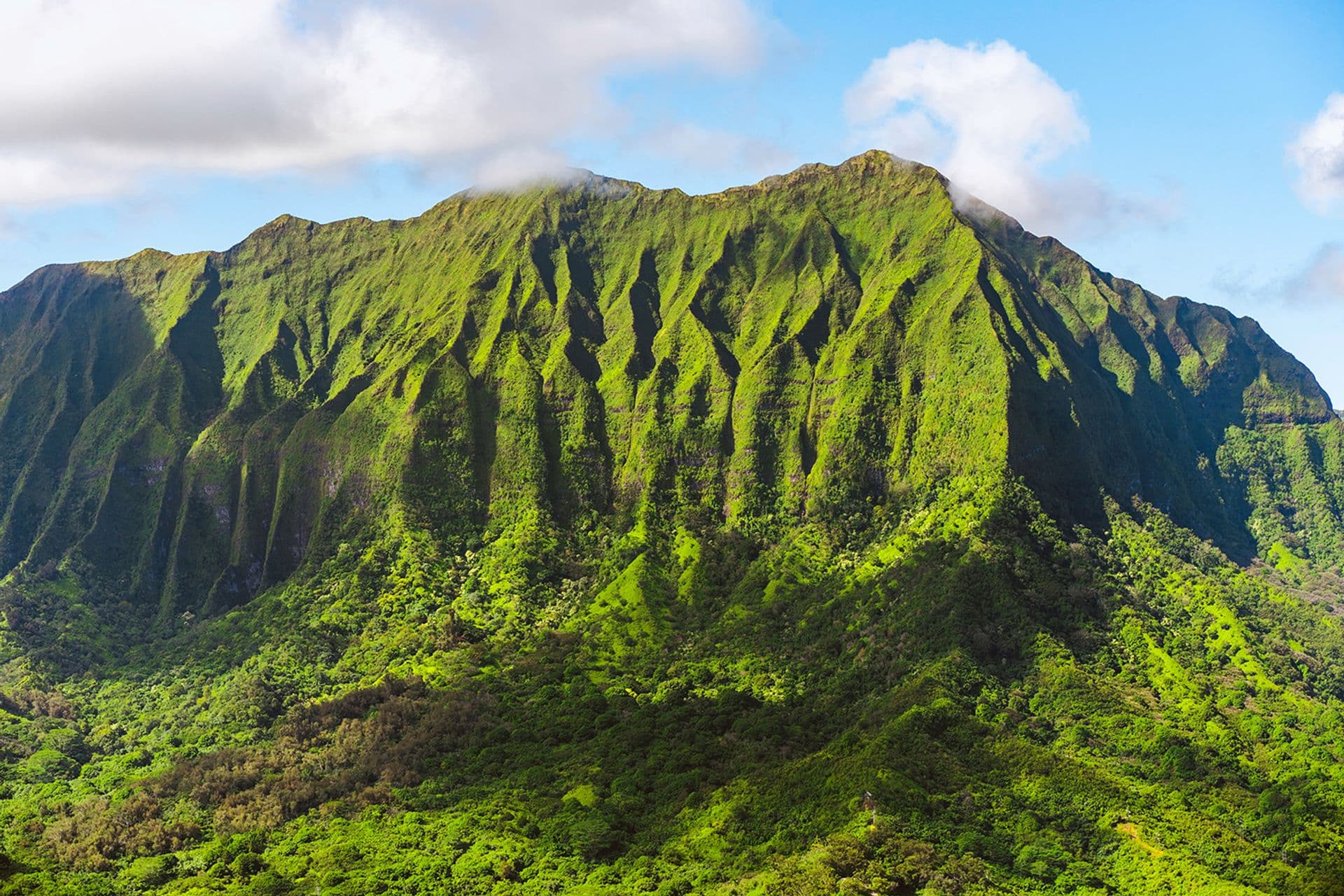
The good part is exactly as good as advertised. The wind, the adrenaline of looking straight down at the ocean from 2,000 feet, the colors of the reef and the drama of the Ko'olau cliffs — all of it lives up to the hype. There's a reason this tour has 1,200+ five-star reviews. The experience is genuinely unforgettable.
Here are the things worth knowing:
It's still a shared cabin. Unless you book the private landing tour, you fly with 3–5 other passengers. Everyone is courteous, but you share the space and the experience.
You still fly at 2,000 feet.The views are sweeping and panoramic, but you won't see fine details on the ground. Reef texture, marine life, individual surfers — that level of detail requires lower altitude than helicopters typically fly.
Not every seat is the “door seat.”Doors are removed from both sides, but seating is assigned by weight distribution. If you're in the middle, the experience is still amazing — you just have slightly less of that unobstructed edge feeling.
None of this diminishes the experience. It just helps to go in with clear expectations.
Going Further — Fully Open-Air in a Gyroplane
If what draws you to doors-off is the open-air factor — the wind, the unobstructed views, the feeling of being in the sky — there's an experience that takes that concept to its logical conclusion.
A gyroplane flight has no doors to remove because there are no doors to begin with. No cabin walls. No windows. You sit in an open cockpit with a small windshield, the pilot in front of you, and nothing else between you and the sky. At 1,000 feet, the detail is extraordinary — you see reef formations, sea turtles, the texture of waves. With only one passenger per flight, the entire experience is yours.
It's a different kind of flight than a helicopter — more intimate, more sensory, lower and slower. The coverage area is Oahu's North Shore rather than the full island. Starting at $249, it's also more accessible.
Which Should You Book?
If you want to see all of Oahu's landmarks in one dramatic flight, book the doors-off helicopter tour. It covers more ground and hits every major site.
If you want the purest open-air experience — lower, slower, more personal, with nothing between you and the island — book a gyroplane flight.
If you can do both, do both. They're complementary experiences that show the same island from completely different perspectives. The helicopter gives you the epic overview. The gyroplane gives you the intimate close-up. Together, they're the complete aerial portrait of Oahu.
Frequently Asked Questions
Is a doors-off helicopter tour safe?
Yes. Passengers wear FAA-compliant harness systems secured to the seat frame, the same type used in aerobatic aircraft. The crew checks every restraint before takeoff. Doors-off tours have an excellent safety record and are operated under strict FAA regulations.
What should I wear on a doors-off helicopter tour?
Closed-toe shoes are required — sandals and flip-flops are not permitted. Wear a light layer since it can be 10-15 degrees cooler at altitude with the wind factor. Dark clothing is recommended for photographers to reduce reflections. Hats, scarves, and loose jewelry are not allowed.
Can you bring a camera on a doors-off helicopter tour?
Yes, cameras and smartphones are welcome and encouraged. Use a secure wrist strap or tethered case — if anything leaves your hand, it is gone. GoPros need a secure mount (no selfie sticks). Loose bags, purses, and accessories must be stored in a locker before the flight.
How cold is a doors-off helicopter ride?
Expect it to feel 10-15 degrees Fahrenheit cooler than ground temperature due to altitude and wind. In Hawaii, that typically means mid-60s to low-70s in the cabin. A light jacket or long-sleeve layer is enough for most passengers. The wind is breezy rather than biting.
What is the difference between a doors-off helicopter and a gyroplane?
A doors-off helicopter removes the doors but retains a cabin structure and flies at around 2,000 feet with 3-5 passengers. A gyroplane has no doors, no cabin, and no windows by design — it is a fully open-cockpit aircraft that flies lower at 1,000 feet with just one passenger and one pilot. Both offer unobstructed views, but the gyroplane is a more intimate, sensory experience.