Why Seeing Oahu from the Air Changes Everything
You can drive the entire coast of Oahu in about two hours. You can hike to ridgeline lookouts, snorkel over the reef, and walk every beach from Waikiki to Haleiwa. None of it prepares you for what the island looks like from 1,000 feet up.
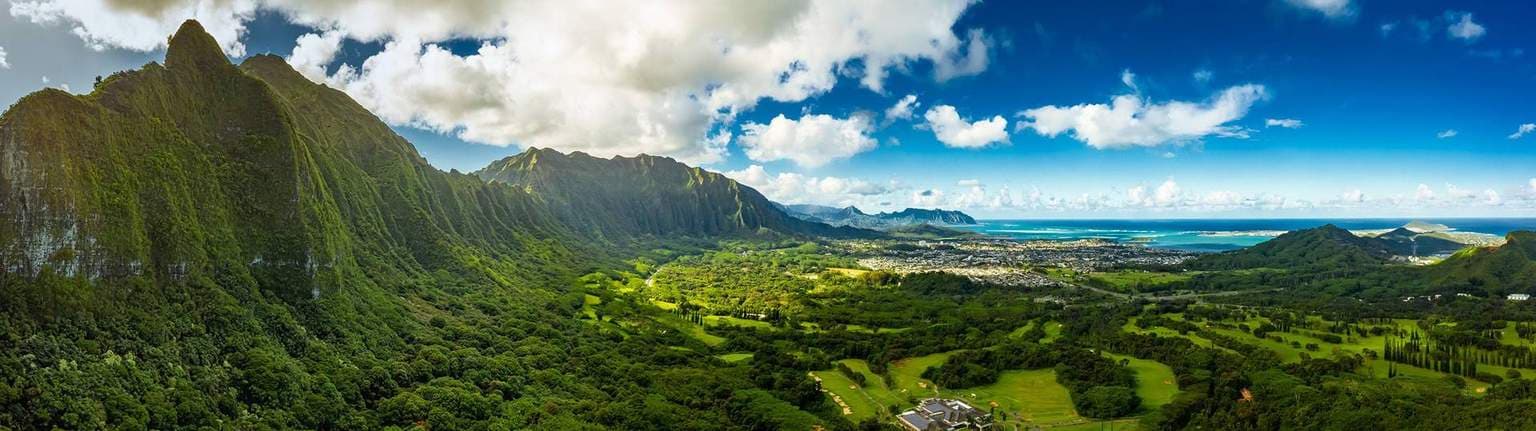
From the air, Oahu makes sense. The volcanic craters reveal their full shape. The reef shows colors you can't see from the surface. The North Shore stretches out in a single, unbroken line of white water that goes on for miles. Whatever you choose to fly in, getting above this island is one of those experiences that rearranges your memory of a trip.
Here are the seven best ways to do it — compared honestly, so you book the one that actually fits your trip.
1. Helicopter Tours — The Classic Choice
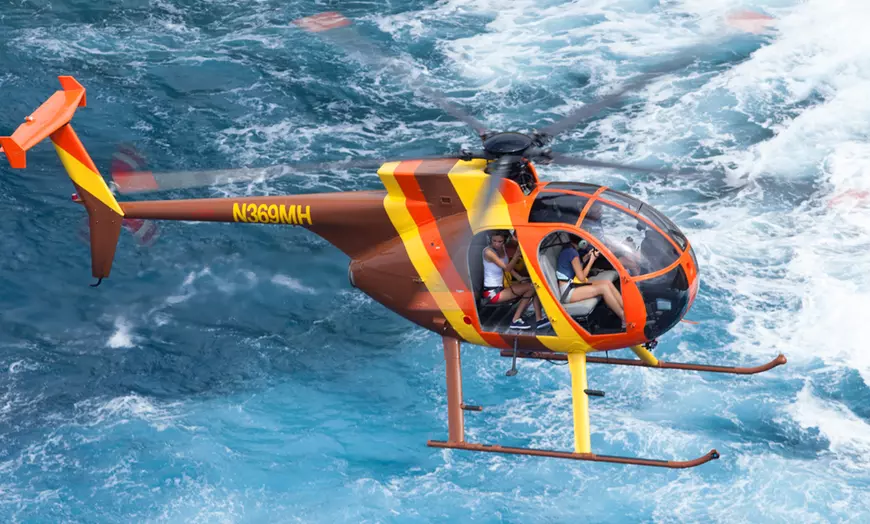
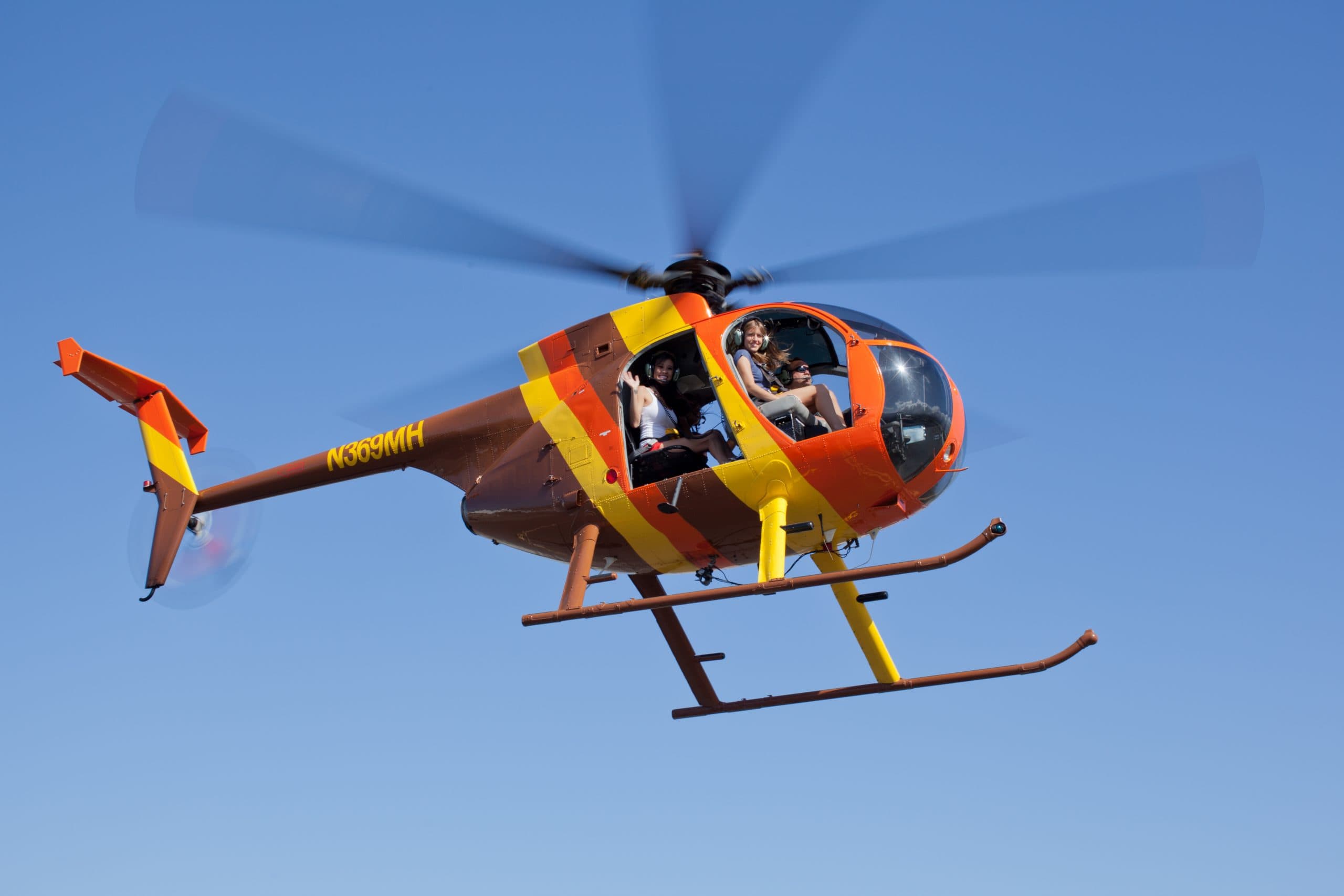
Helicopter tours are the most popular aerial experience on Oahu, and for good reason. In 50 minutes, you cover every major landmark — Pearl Harbor, Diamond Head, the Ko'olau Mountains, Hanauma Bay, and the North Shore. The doors-off configuration is the gold standard: no glass, no reflections, just open sky and the island beneath you.
Prices start around $380 per person for a doors-off flight and go up to $2,599+ for a private charter with a mountaintop landing. For a detailed breakdown of every helicopter option, costs, and what to expect, read our complete guide to helicopter tours on Oahu.
Best for: First-time visitors who want to see everything in one flight. Bucket-list travelers. Photographers who need unobstructed angles.
Explore the doors-off helicopter tour or the private landing experience.
2. Gyroplane Flights — The Open-Air Experience
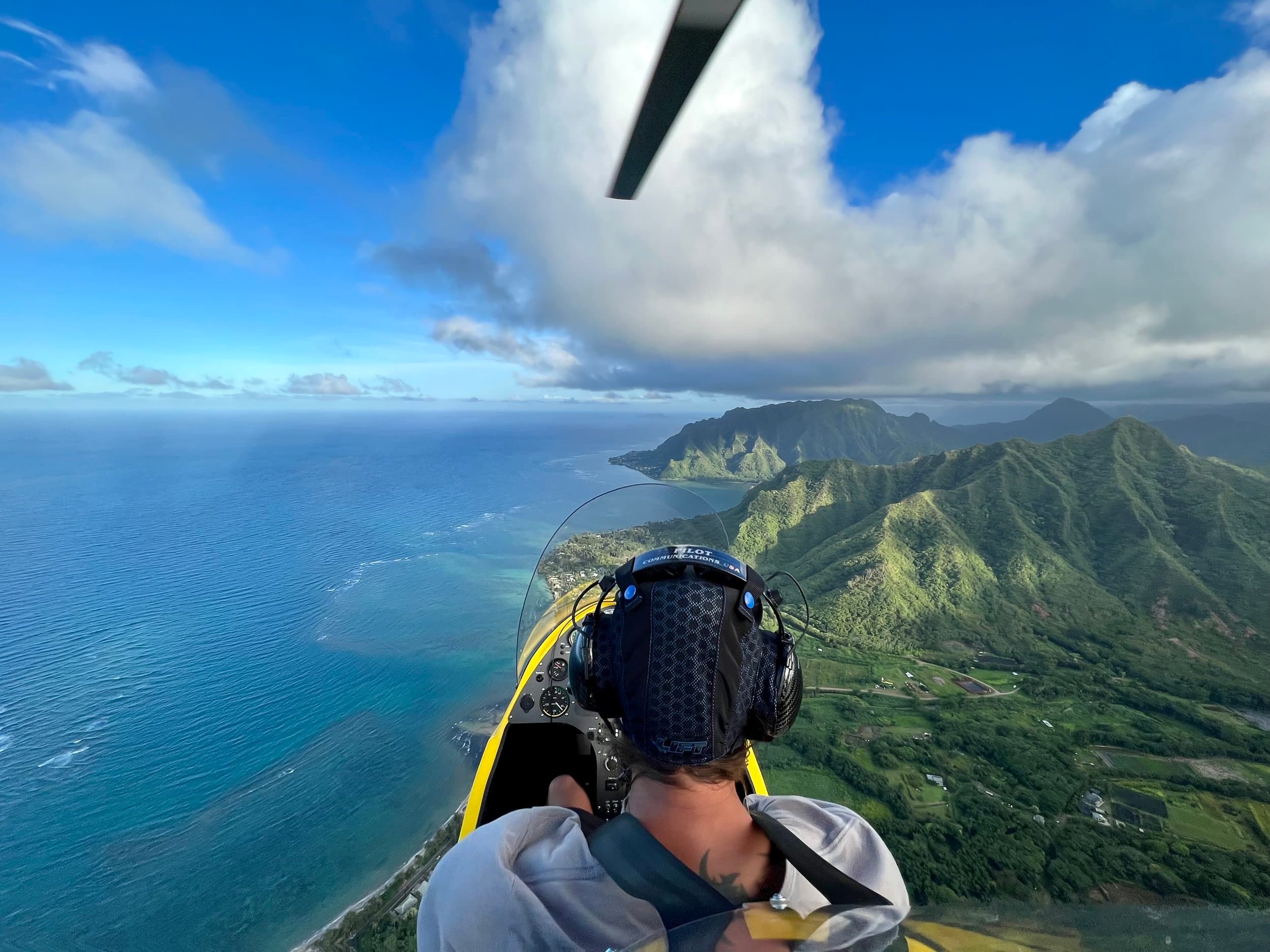
If a helicopter tour is like seeing Oahu from a high-rise balcony, a gyroplane flight is like sitting on the edge. The cockpit is completely open. There are no doors, no cabin walls, and no windows between you and the island. You sit in the rear seat. Your pilot is in front of you. The wind is on your face, and the ocean is 1,000 feet below.
Gyroplanes fly lower than helicopters, which means you see things in a way that higher-altitude flights simply can't deliver — individual coral formations, sea turtles gliding over the reef, surfers dropping into waves on the North Shore. The rotor isn't engine-driven, which makes the ride surprisingly quiet and smooth.
Only one passenger flies at a time, which makes this the most intimate aerial experience on Oahu. The pilot adjusts the route based on what catches your eye — if you want to circle back over something, you circle back. Starting at $249 per person, it's also more accessible than most helicopter options.
Best for: Adventurers. Photographers. Repeat visitors who've already done the helicopter. Anyone who wants to feel the flight, not just see it.
See full details on the gyroplane discovery flight.
3. Glider Rides on the North Shore
Glider flights launch from Dillingham Airfield on the North Shore, the same field where gyroplanes depart. A tow plane pulls you to altitude, then releases you to soar on thermal currents with the engine off. It's the quietest way to fly on Oahu — nothing but wind and the creak of the airframe.
The experience is peaceful rather than thrilling. Views are beautiful but limited to the North Shore and Waianae coast. Flights typically run 15–20 minutes and cost $150–$250 depending on duration. Availability is weather-dependent — thermals need to cooperate — so plan for flexibility.
Best for: People who want a serene, engine-off experience. Aviation romantics. Those with a flexible schedule who don't mind rebooking if conditions aren't right.
Book a glider ride on the North Shore.
4. Parasailing in Waikiki
Parasailing gets you airborne off the coast of Waikiki for about 8–12 minutes at 500–800 feet. It's fun, the views of Diamond Head and the Waikiki skyline are great, and the boat ride out is enjoyable on its own. Prices run $80–$120 per person.
That said, it's not really a tour. You go up, you float, you come down. There's no narration, no route, and no ability to explore. The views are of one stretch of coastline, not the whole island. It's a theme-park thrill more than an aerial experience.
Best for: Quick thrills. Families with kids who want something fun between the beach and dinner. People who want to be airborne without committing to a full tour.
Book a parasailing experience in Waikiki.
5. Skydiving at Dillingham
Dillingham Airfield on the North Shore is home to one of the most scenic tandem skydiving operations in the world. You jump from 10,000–14,000 feet, free-fall for about a minute, then float under canopy with panoramic views of the North Shore, the Waianae Range, and — on clear days — neighboring islands.
The aerial views are genuinely stunning, but they're a bonus, not the main event. You're there for the adrenaline. Tandem jumps run $250–$350 per person. Interestingly, gyroplanes also depart from Dillingham, so some travelers pair the two experiences in one North Shore day trip.
Best for: Adrenaline seekers. People who want aerial views as a side benefit of jumping out of a plane. Anyone already heading to the North Shore.
6. Ultralight Flights
A handful of operators offer powered hang glider and ultralight flights from smaller airfields around Oahu. These are lightweight, open-air aircraft that fly low and slow — similar in spirit to a gyroplane, but with a fixed wing rather than a rotor. Availability is limited and changes seasonally, so these require advance research and booking.
Best for: Aviation enthusiasts looking for something unusual. Travelers who've done helicopters and want a different perspective.
7. Scenic Small Plane Flights
Small Cessna-style aircraft offer scenic flights that cover more ground than a helicopter at a lower per-person cost. Some operators fly inter-island routes, giving you aerial views of Molokai, Lanai, or Maui during the transit. Prices vary widely — $150–$400 — depending on route and duration.
The trade-off is altitude and perspective. Fixed-wing planes fly higher and straighter than helicopters or gyroplanes, which means less dramatic angles and fewer opportunities to circle landmarks. Good for inter-island travelers who want aerial views as a transit bonus.
Best for: Budget-conscious travelers who want aerial views. Inter-island visitors looking to combine transit with sightseeing.
How to Pick the Right Experience
Different travelers want different things. Here's how to match the experience to what you actually care about:
Someone who wants a truly personal experience:The gyroplane. One passenger, one pilot, completely open cockpit. It's yours alone — no shared cabin, no competing for window seats. Traveling as a pair? Book back-to-back flights so you each get your own experience, then swap stories after.
Families with kids: A doors-off helicopter tour. Kids 10+ can fly, the Hughes 500D is exciting without being scary, and 50 minutes is the right length to keep everyone engaged. The shared cabin means you experience it together.
Thrill seekers: Skydiving, no question. The aerial views are a bonus, but the free-fall is the point. Pair it with a North Shore gyroplane flight for a full day of adventure from Dillingham.
Photographers: Doors-off helicopter for sweeping landscape shots. Gyroplane for close-range, reef-level detail. Ideally, do both — they capture completely different perspectives of the same island.
Repeat visitors who've done a helicopter:The gyroplane. It's a genuinely different experience from anything else on the island, and it'll give you a perspective on Oahu's North Shore that you can't get any other way.
Whatever you choose, book early — especially in peak season. Morning flights get the calmest air and best light. And if you're deciding between a helicopter and a gyroplane, there's a simple answer: if you can do both, do both. They're complementary, not competitive.
Frequently Asked Questions
What are the best ways to see Oahu from the air?
The most popular options are doors-off helicopter tours for full-island coverage, gyroplane flights for an intimate open-cockpit experience over the North Shore, glider rides for a quiet engine-off flight, parasailing in Waikiki for a quick thrill, and skydiving at Dillingham for the ultimate adrenaline rush. Each offers a different altitude, route, and experience level.
Is parasailing or a helicopter tour better on Oahu?
They serve different purposes. Parasailing is a short 8-12 minute thrill ride at 500-800 feet over Waikiki with no narration or route — it is fun but limited. A helicopter tour covers the entire island in 50 minutes with a guided narrative, hitting every major landmark from Pearl Harbor to the North Shore. For sightseeing, the helicopter wins. For a quick beach-day activity, parasailing works.
What's the most unique aerial experience on Oahu?
A gyroplane flight is the most unique option. It is a fully open-cockpit aircraft with no doors, no windows, and no cabin — just you, the pilot, and the sky. Flying at 1,000 feet with only one passenger per flight, it offers a level of intimacy and sensory immersion that no other aerial tour on Oahu can match. Flights start at $249.
How do I choose between aerial tour options on Oahu?
Match the experience to your priorities. Want full-island coverage and iconic landmarks? Book a helicopter. Want an intimate, open-air adventure over the North Shore? Choose a gyroplane. Want silence and serenity? Try a glider. Want pure adrenaline? Go skydiving. If budget allows, a helicopter plus a gyroplane on different days gives you the most complete aerial perspective of Oahu.
How much do aerial tours cost on Oahu?
Prices vary widely by experience. Parasailing runs $80-$120 per person, glider rides cost $150-$250, gyroplane flights start at $249, doors-off helicopter tours start around $380, and private helicopter charters with mountaintop landings go up to $2,599 or more. Morning flights in any aircraft tend to have calmer air and better light for photography.